
Press is public trust, public utility
The debate continues
The debate continues
Press is public trust, public utility
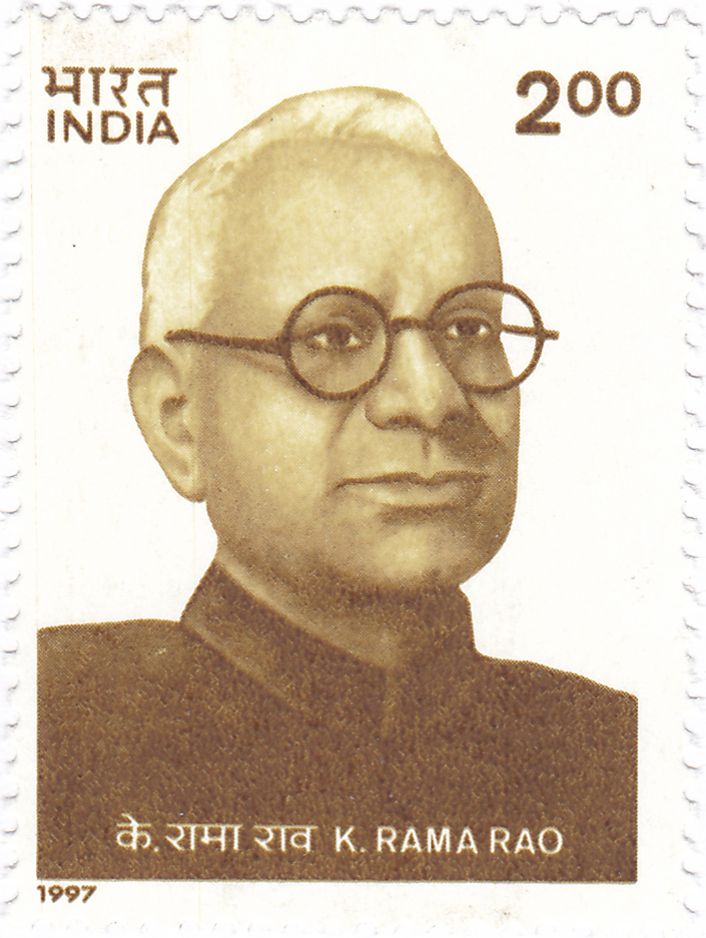
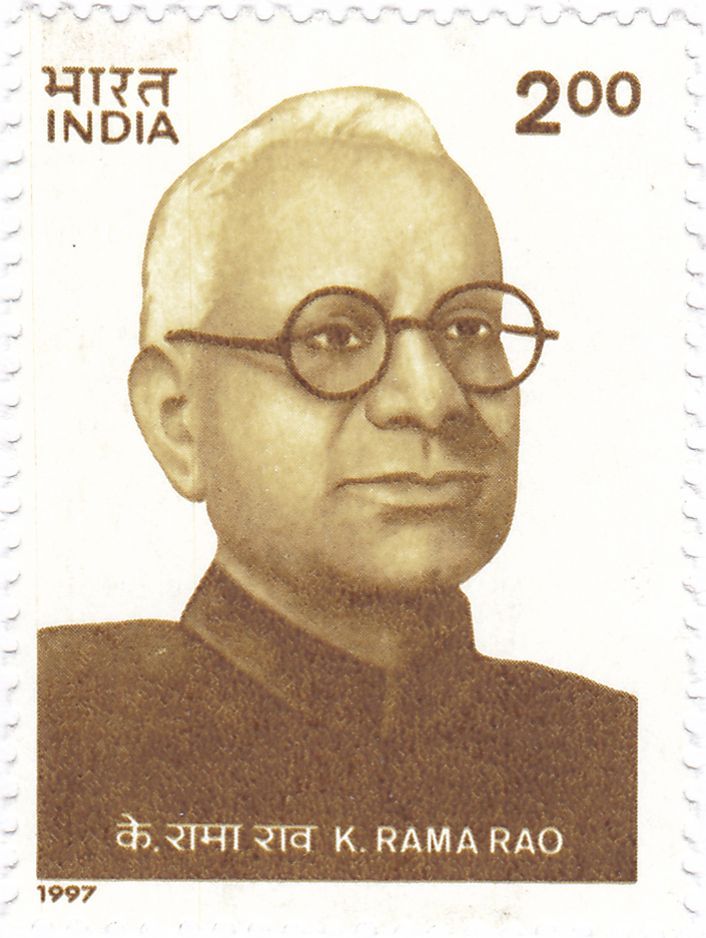
Seventy-four years ago, eminent Editor and freedom-fighter K. Rama Rao had warned media-persons against the danger of the new type of the vulgar press with its blatant appeal to the prejudices and passions on the low tastes and appetite of the people.
(Reproduced here is the presidential address to the first conference of the Bihar Working Journalist Union, Patna, on 1 November 1952 by late K. Rama Rao, M.P. and vice-president of the Indian Federation of Working Journalists.)
What is the place of the Press in our new democratic polity? Is it the Fourth Estate it is generally described to be? If it is not so in an effective sense, what are the reasons? What are the status and the function of the newspaper in relation to the present-day society? Where does exactly the working journalist come in? How does he fare? Is he the salt and strength of this earth or is he something different? What is the proper place of the owner and the editor, the worker and the employer? Are we satisfied with the present standards of production? How shall we chart the future?
There are ever so many questions of this nature that are challenging serious consideration and demanding urgent answer. In an era of planning, haphazardness and irregularity should be cut down to a minimum. An awakened and liberated people require something new, something fresh, something vital, enduring and energising.
We consider that the appointment of a Press Commission by the Government of India has come at the right moment. We are betwixt an old world that is dead and a new one that is struggling to be born. We have become free. We have given unto ourselves a constitution embodying a very liberal type of democracy and also several sublime and sonorous Directive Principles. We are determined to make popular rule an abiding and a fructifying reality.
A logical corollary to the coming of freedom must be a complete overhaul of the ancient and the outworn elements and the establishment of new primary as well as ancillary institutions to support the new spacious set-up. The Press is one of the most important of such institutions. We have done well, therefore, in taking the initiative and asking for a Commission of Inquiry. The Prime Minister and his Government have been gracious enough to accede to our request. We cannot offer them thanks too many.
Our attitude
We would offer the Press Commission our fullest cooperation in achieving its objective namely, the making of an impartial survey of the situation, killing existing evils and laying out a royal road for an all-party cooperation that would build up for the Press its rightful and honoured place in the Cooperative Commonwealth and the Welfare State to be.
We approach the investigation in a spirit of eager humility and unreserved helpfulness. We have no time for quarrels or for panicking and pretending. We do not complain, we do not accuse––there is no bar, no bench, no dock. Only a common task awaits all those interested in the Press.
The terms of reference of the Commission are satisfactory, in fact, they are only a shortened replica of the fairly lengthy resolution on the subject we passed at Calcutta in which we laid down the lines of investigation. These among other I.F.W.J. conferences are: Better standards of production of newspapers, better working condition of the journalists and opportunities for training them, freedom of the Press, indigenous supply of newsprint and of machinery, and control, finance, ownership and management of newspapers and its effect on the quality of newspapers.
Stand up and demand
It is our main business to place before the Commission an array of facts and figures and help it formulate appropriate conclusions and make useful recommendations. It is a laborious task no doubt that is awaiting us, but it must be done, and done well. We must speak out our mind. This is the supreme work of our generation. We belong to the working classes and if today we do not stand up for our rights and make our demands, we never will.
In passing, I would stress the difference between the terms of reference of the Royal Commission on the Press in England and our Commission. Our universe of discourse and terrain of investigation is infinitely broader, while the Royal Commission had to deal with only some specific problems that directly bear upon the conditions of the British press. Again, we have had two inquiries made in Madhya Pradesh and Uttar Pradesh into the conditions of working journalists, but that was the only purpose of the inquiries. These reports are, however, a gold mine of information, and quite satisfactory are their recommendations. Lastly, do not forget that the Commission's work includes other press workers also, such as the personnel of the management and the press factory. We have to help them in preparing their case. Our interests are common.
TENETS OF OUR FAITH
What are the tenets of our faith? Let me mention them:
(1) We believe in a Free Press in a Free Country. We hold that an honest and fearless working of the Press and a successful functioning of democracy in our country are the paramount considerations before us. We concede that the freedom of the Press involves the obligation of correct behavior and the duty of doing social good. Any infringements of the rights of the Press and any failure on its part in discharging this essential obligation amounts to tempering with the sovereign rights of the people. Consequently, the State is entitled to take such preventive, curative, such positive, or negative action as it might feel necessary to protect democracy and to ensure a genuinely free and responsible Press.
(2) We believe that the Press is a public trust and that the newspaper is the lay scripture of the day. It has a special role to play in under-developed countries and–therefore, everything connected with it is of great national interest, whatever the type of ownership and management.
(3) A newspaper is a public utility concern. Falling into that category, it is subject to the limitations of that category. It is not surely the field for illegitimate private profits, not the field for big business on the rampage.
(4) We believe in national self-sufficiency in regard to the means and sources of production, such as machinery, newsprint and manpower.
(5) We believe in the small paper as well as the big, the nation as well as the regions thereof.
(6) We believe in particular, that the Indian language newspaper must be enabled to go ahead as it commands the future, but we would do nothing to impair the influence, the popularity and the authority of papers published in the English language, so long as there is a demand for them.
(7) We believe that while the newspapers of this country are as good enough for the great nation we have set out to be. There is need for higher efficiency standards, which in their turn involve greater opportunities of training for the worker and greater latitude of self-expression. But self-respect alone can be the basis of honest, efficient work in democracy.
(8) We believe that if newspaper production has become an industry, journalism has not thereby ceased to be a profession. The latter is, therefore entitled to its legitimate status and proper function, its dues and its honours. If, again, newspaper production is an industry as it has become, then all the advantages of legislation for the protection of the rights of the industrial worker should go, for he same reason, to those who produce newspapers as well. Further, we refuse to have a caste system in industrial democracy.
(9) We would not tolerate lopsided development. There is no place for unmitigated capitalism in a regime of mixed economy. We believe with Sri V. V. Giri, our esteemed Labour Minister of the Government of India, that labour is the dominant partner in the industrial field.
(10) We believe in trade unionism. We are for industrial peace and harmony and the use of the machinery of negotiation, conciliation, arbitration and adjudication.
(11) We believe in state intervention beyond a stage and up to a point in the interest of the public, for the sake of national good and social security in the larger sense of that phrase, and for ensuring equality of opportunity under the seminal principles of the Constitution.
DANGERS TO THE PRESS
The Press is today beset with five kinds of defect and danger which may be briefly examined: (a) Advent of big business and the forging of chains; (b) vulgar journalism; (c) attacks of the State on the freedom of expression; (d) unorganized nature of the journalistic profession; (e) widespread ignorance and illiteracy in the country and lack of political experience and all their attendant dangers.
An immediate and a formidable danger, potential as well as actual, is the arrival of Big Business in the newspaper world with all its advantages and disadvantages to the country. It is not my desire to make too much of the chains, for a large part of the country is still not covered by them and large sections of the Press are still free from them. But Big Business is wide already in its ramifications and sufficiently menacing in its evils. Something has got to be done about it. A newspaper is not the appropriate sphere for bulling and bearing; for quick, easy and excessive profits; for black-marketing in newsprint; for proprietorial dictation; for un-journalistic practices; for those commercial devices that may work well in the sale of soap and tobacco, but are not wanted in the purveying of news and the educating of opinion.
On two things the Bosses are determined. They tenaciously expound the view that their newspapers are their own private concerns and they are not bothered about the sacredness of the trust or the public character of the enterprise. The sense of social obligation cannot penetrate the hide of vested interests. They have to be educated into the proper mind and temper.
With the coming of freedom newspaper enterprise has been less risky than before, while it continues to yield high profits, thanks also to the indirect subsidies the State gives and the sheltered nature of the industry. Secondly, there is the increasing and irresistible temptation of acquiring political power which ownership of the newspaper undoubtedly gives. If it is not so, there is not meaning in jute and cotton and sugar magnates coming into this line of business. And for them political power has a definite cash value too.
What will that mean in the end? It will surely put the whole business in the hands of a narrow oligarchy, newspaper production having become a highly expensive proposition, an oligarchy drawn together by kinship of blood or identity of faith and outlook. It will link up with Big Business. Since by nature it must worship the rising sun, it will be opportunist and have no principles or scruples in the conduct of its business. It will be always on the lookout to oppose progressive policies and sooner or later resolve itself into an enemy of democracy and the working class, thereby responsively provoking class conflict to the imperilment of our young Republic. Already it has reduced the profession to the level of rabid commercialism. It has no respect for intellectual labour. In fact, some newspaper proprietors are more respectful to the press supervisor than to the sub-editor, more afraid of the factory hand than the educated clerk. The editor has been reduced to the level of a gumashta in a shop. A chain in my opinion is a negation of freedom erected into a system of commercial and political profiteering. One can quite visualise the possibilities of cartelization with the further danger of international link-ups. We have no doubt that the Press Commission will look deeply and wisely into this and prescribe the proper remedies.
THE VULGAR PRESS
The second danger is the new type of vulgar Press with its blatant appeal to the prejudices and passions, the low tastes and appetites of the people. An unabashed desire for high circulations dominates its outlook. This is a danger which must be nipped in the bud. There are no depths of scurrility it has not reached in this country. It is satisfied with nothing less than a quartet of sensations every week per paper. It does not spare a thought for the decencies and proprieties of life. It indulges in vituperation of the worst type. It revels in scandal-mongering and mostly in fake exposures, it has not tender respect for womanhood, it is demoralizing public life. Pretending to the contrary it often applauds vice and condemns virtue.
Papers of this kind are not only a disgrace to the country but pervert the public taste, make genuine education of the public difficult and render the intellectual paper alien and unacceptable. This type of Press has unfortunately for us, provided an excellent excuse for the Government to put on the statute book the recent Press Act. Any blow aimed at this section of the Press would not be uncalled for, provided it is reasonable and free from undue severity and done by the due process of law. One would, however, expect that, with the lifting of the limitations and prejudices of the public, the journalists and the proprietors, the wretched phenomenon will come to an end. The best prophylactic as well as the best corrective would be internal reform and the reorganization of the Press with its code of ethics, with its tribunal for the erring and a General Council that would be a vigilant custodian of its working standards.
FREEDOM OF PRESS
The third danger to the presses from the Government. This subject has been engaging public attention in our free democracy, no less prominently than in our unfree days. Two enactments of recent years provide illustrations of what I am saying.
The working journalists have opposed the recent amendment to the Constitution, restricting the freedom of expression as contained in the original Article 19 of the Constitution. But the agitation has failed of its purpose.
The new Press Act was also opposed by us in its formative stages, though in vain. But we succeeded in getting the offensive aspects of the original Bill considerably changed. The latest attack on the Press comes in some measure from the preventive detention legislation passed by Parliament at its last session.
We are free to admit that freedom is always relative. But it must not be too relative to suit the needs and exigencies of the State, otherwise it would be no freedom at all.
Our contention is that if the Press does not enjoy a privileged position, neither should it be subjected to special handicaps, say, like the imposition of securities. We trust that the Press Act will go. When Parliament is asked to renew it, it’s working should be carefully examined and the results properly assessed. It will be a gross abuse of the intention with which it was put on the statute book if it is make to serve any purpose other than removal of scurrility and obscenity. UNORGANISED PROFESSION
The question of the freedom of the press has been complicated by the recent developments in the Indian Press world. We would gratefully echo the sentiments recently addressed by the Prime Minister to the All-India Newspaper Editors' Conference in New Delhi: "What is the Press? Whatever it may be, a major factor in it is the money involved in it and the owner and proprietor of that money. Does the freedom of the Press ultimately mean the freedom of the rich man to do what he likes with his money through the press? The poor man or the man with inadequate means will not have much of an opportunity to express his ideas except in a very limited and small way. He may be good or brilliant but the person who gives him the opportunity nowadays is the person, with means, who can run newspapers, buy them or stop them, employ people whom he likes and dismiss people whom he dislikes".
It is thus difficult for us to withhold assent from this passage. We, as presspersons, agree that it is the duty of the State to prevent dangerous developments, when it is convinced, they are dangerous. More than that, State, in its own interest, should make it possible of the poor man or the man with the inadequate means to have an opportunity to express his ideas.
The fourth danger to the Press comes from the unorganised nature of the working journalists as a community. We are just waking up. We have started our Federation. We are starting our unions. Strong and powerful trade unions will make for professional solidarity and integrity and will, at the same time, prevent unpatriotic excesses on the part of antisocial elements.
Why should journalists organise on trade union lines? In the first place, as I have already stated, newspaper production is an industry and the inevitable consequence and the inseparable concomitant of industry is trade unionism. Secondly, newspaper proprietors are already well organised in the AINEC and the Indian and Eastern Newspaper Society. If they organise, so we must. Thirdly, we find to our cost that the employers have done little or nothing to meet our demands for better treatment. The AINEC has a sorry tale to tell. Our reply would therefore be organization on trade union lines, meaning thereby the invaluable benefit of collective bargaining. Fourthly, we are mental and physical workers. Let there be no snobbery about it. A subeditor who goes into the press room and comes back with a soiled shirt-sleeve and an ink-smeared hand is as good or as bad as a factory hand. The reporter, roaming day and night for news and more news--is he not a physical labourer also?
Here is a striking passage from that famous classic of journalism The Street of Adventures: There is only one law in this street. If you are going to be married, if your wife has twins, if she has run away with the next door neighbor, if your mother is drawing her last dying breath, you have got to go to Hornsey, or to hell, or to anywhere else, if the RAG wants you to go"
The gracious advice has been tendered to us that this being a highly individualistic profession, whatever that may mean, working journalists should organise on a unit basis, that is to say, if some journalists want to form a union, the union concerned must be related to the paper in which they work and not based on the profession. This advice of my esteemed friend, Mr. A. D. Mani, tendered in the course of his presidential address to the recent session of the AINEC is, I fear, not quite helpful. We like British models and let me then say that British journalists have formed their unions on a professional and not on a company basis. They ought to know. And yet no one can say that the papers they sell have not got each a vigorous, a competitive and an aggressive personality which seeks to have its place under the sun, if necessary, by seizing he standing ground from its competitor. (I am quoting from Sri Mani).
In fact, in England there are too many "aggressive newspapers" assured of their places is the sun. I hold the view that our profession, being a small and limited one, is ideally suited to trade unionism on professional lines.
The fifth danger is the widespread illiteracy and the utter poverty of our people, which retard progress generally and the progress of newspapers particularly. Political immaturity, lack of great traditions also form another handicap. On one side there is grave temptation to exploit this illiteracy and poverty, to preach dangerous and infamous doctrines.
On the other hand, they, however, constitute an invitation, a challenge to the honest journalist to make an all-out effort to educate the people along proper lines.
FUTURE SET-UP
Speaking generally, we are looking forward to the removal of several legal restraints indicated by the tortuous and awkward laws of libel and contempt of court, among others.
We very much want a General Council of the Press on the lines of the recommendations of the Royal Commission of England. Our profession should have its own code of ethics and tribunals. There must be some arrangement in the internal working of newspapers regulating the relations of the editor and the staff and the proprietor, such as staff councils.
WORKING CONDITIONS
We very much want a General Council of the Press journalists with an overpowering sense of realism. We start with the theses that we must "take profits out of war". And journalism is only war against illiteracy, poverty, exploitation and the general malaise of the country. Employer and employee must alike cooperate in this matter.
There is on one side the question of the paying capacity of the industry, and a living wage on the other. There shall however, be no sweating of labour. So long as there is no profit-sharing and no partnership, we have to proceed on the basis of a living wage at a reasonable level. We have to sit down to work out details. I expect that the Press Commission will lay down the fundamental principles on tow lines: immediate action and long-range action.
So far as working conditions are concerned, the reports of the U.P. and M. P. Newspaper Industry Inquiry Committees give reliable guidance in the matter. The staff should be classified and the scale of payment agreeably fixed, bearing in mind that the cost of living has gone up by 400 percent while the receipts of the staff are lagging far behind. On the question of dearness allowance the very modest Gadgil Committee report on the employees of the Central Government is helpful and timely. At any rate, it makes a good beginning. For a big country like India there should obviously be provincial variations with regard to the scales of pay more than in England. There is also the natural difference within the various kinds of paper–––dailies, weeklies ad monthlies. I fail to see how ultimately a national Wages Board can be avoided in the background of the prevailing inflation spiral and the foreground of the Welfare State.
Most of the present difficulties can be got over by the device of the standard contract assuring security to the worker. This will include the number of hours of work, extra payment for extra work, adequate amenities, especially for the night shift, proper leave and holiday arrangements, bonus where possible and general compulsory provident fund and gratuity, retirement and insurance benefits. Above all, there should be provision for a reasonable notice in the event of termination of services and protection against arbitrary dismissal. The U.P. Committee report rightly stresses that working conditions in journalism should be approximated to those of Government service.
Special mention should be made of the district correspondents. They are the worst paid in the profession of journalism. Even the most prosperous papers pay them a pittance only. There are the veriest Harijans of the fold. It is clear that the country will be soon –––it is already –––studded with small newspapers, serving local needs. The district correspondent will then have come into his own and will have to be paid properly if the local paper is to live.
IMMEDIATE ACTION
At the time we were asking for a Press Commission in Calcutta, we also passed another resolution for an inquiry into the working conditions of the journalists with a view to immediate relief as the conditions were deteriorating. The Commission will surely take more than the allotted time to make its report. We would, therefore, suggest that the question of improving the financial condition of journalists be independently taken up by the Commission or through a subsidiary agency.
We have another request to make. The State Government should immediately take legal action to prevent intimidation of workers forming trade unions. It may be done by executive action, as it is urgently necessary, if we are to go ahead with organising our movement. They should also stop at once un-journalistic practices like the crossword and square-word puzzles.
BIHAR UNION
Better late than never, the journalists of Bihar have formed a union of their own. I trust it will receive the amplest cooperation of the profession and the fullest support of the public. There must be vigorous units all over the country to support our Federation. And you have started your work not with a whimper, but with a bang. The local union has done well to rally round Sri Vinaya Sinha and Sri Sarvadeva Ojha of the Searchlight over the outrageous treatment they were subjected to by the editor of the paper. The public of Bihar are also to be congratulated on the spontaneous support they gave to the victimized journalists. Also, the management of the paper on its retracing the steps later and cancelling the editor's order terminating their services for their trade union activities.
I have no doubt of the bright future of journalism in Bihar, in spite of some adverse conditions, such as the deplorably poor state of the Hindi press, the obstinacy of proprietorial opposition, the extra provincial competition. But the Press of Bihar has undoubtedly come into man's estate, thanks largely to the character and caliber of the working journalists, the eminent men that have preceded them, the great traditions that have been inherited, and the high reputation of the province for political leadership and journalistic integrity.
The tempo and the volume of our national life are increasing with beneficial reactions on journalism. There was never a better time for the good newspaper and the good journalist. Party warfare, great causes and noble convictions are the very breath of political controversy on which we as a class thrive. In Bihar you enjoy the advantage that the State language is also the local language, and that both the Government and the public are vigorously pushing forward with its improvement. You have a good popular Government which ensures the freedom of the Press.
SELF-DISCIPLINE
The Prime Minister, in his recent address to the AINEC, earnestly pleaded for self-discipline in the profession of journalism. A free agent as the working journalist today is not, yet it is still his duty to practice the great precept. Jawaharlal Nehru has preached : "Character is as important as caliber and the work we do is judged by its results. Bad men cannot produce good newspapers. Lack of discipline means moral anarchy and mental ineptitude. We have to improve the tone of our journalism. We must be accurate in the presentation of news. We must keep to the path of rectitude. We must restore the much-shaken confidence in the written word."
I am not sure how in the changing conditions journalism can be the mission it has been. But those of us who are in it can at least enjoy its thrills, its pleasures and sensations. "A great newspaper" says Sir Winston Churchill, "with its machinery crashing and grinding away, reminds me of first-class battlefield and a first-class general election". And we feel it in our own blood and bone every day.
The message of the hour is clear before the working journalist. It is the same that Dadabhai Naoraji gave years ago to the Indian National Congress: "Organise," "agitate." And we shall not fail where the Congress has succeeded.
Let us grow from more to more. Let us build a great organization; let there be an enlightened priestcraft serving the spiritual, political and intellectual needs of our people. Let us continue our work as sentinels of their liberty and custodians of their honour and interest.